
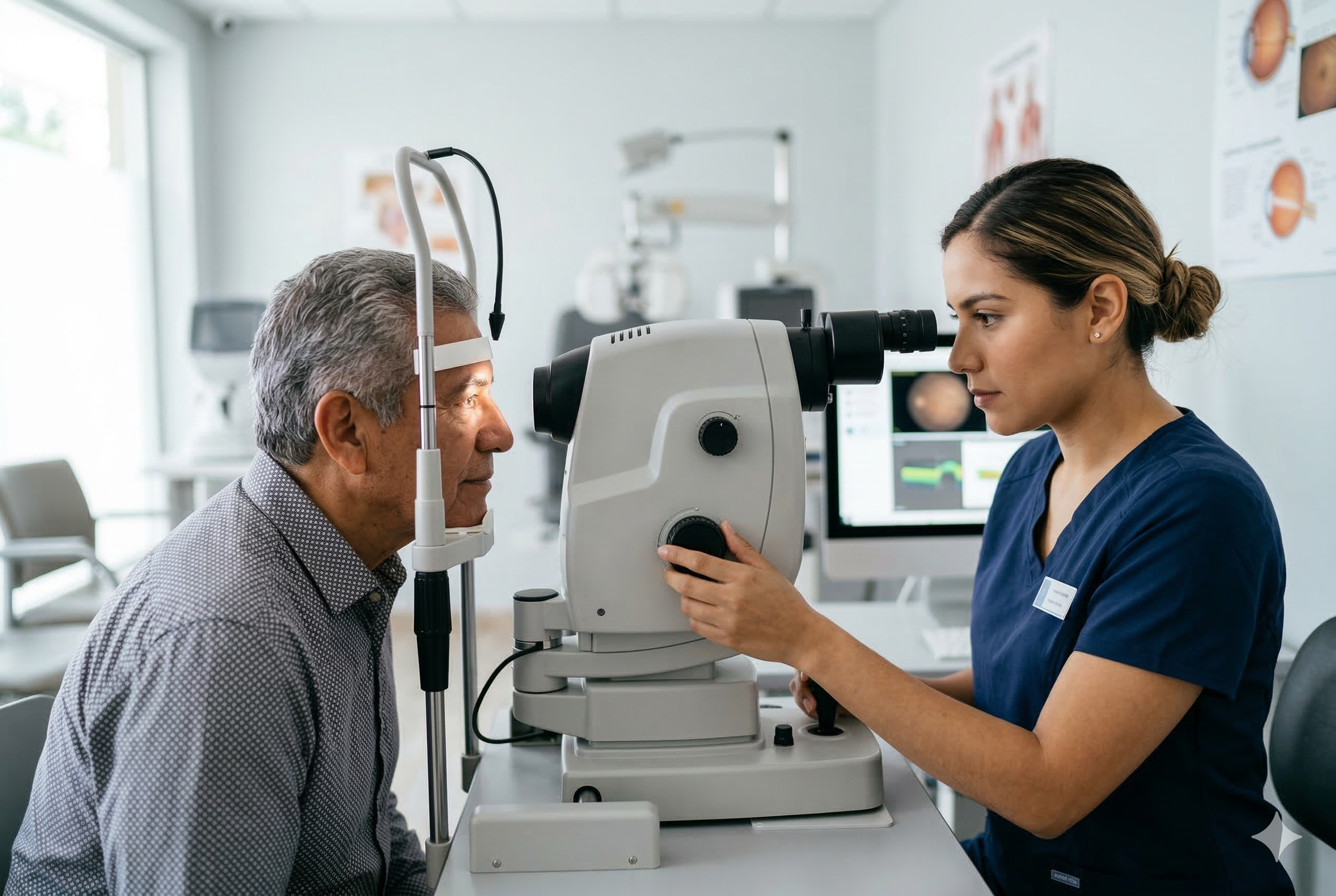
Diabetic retinopathy is one of the leading causes of preventable vision loss in working-age adults. Most concerning is that, in many people with diabetes, the disease can progress for years without causing noticeable symptoms.
This means a patient may feel fine, see relatively well, and still have progressive retinal damage.
That is why international guidelines recommend regular retinal checks for all people with diabetes, even when there are no visual complaints.
-
American Diabetes Association (ADA):
https://diabetesjournals.org/care/article/46/Supplement_1/S203/148041/Retinopathy-Neuropathy-and-Foot-Care-Standards-of -
World Health Organization - Diabetes and eye complications:
https://www.who.int/news-room/fact-sheets/detail/diabetes
What diabetic retinopathy is
Diabetic retinopathy occurs when high blood glucose levels damage the blood vessels in the retina, the light-sensitive tissue at the back of the eye.
Over time, these vessels may:
- dilate or weaken
- leak fluid or blood
- become blocked
- form abnormal new vessels
These changes affect the retina’s ability to process light and send signals to the brain.
According to the National Eye Institute, diabetic retinopathy is one of the leading causes of blindness in adults aged 20 to 74.
https://www.nei.nih.gov/learn-about-eye-health/eye-conditions-and-diseases/diabetic-retinopathy
The problem: the disease often causes no symptoms at first
In the early stages, diabetic retinopathy may not cause any noticeable signs for the patient.
Symptoms usually appear when the damage is already more advanced, for example:
- blurred vision
- spots or floaters
- difficulty seeing at night
- dark areas in the visual field
- vision loss
That is why waiting for symptoms is not a safe strategy.
Regular eye exams make it possible to detect early changes when it is still possible to prevent complications.
How often should a person with diabetes get checked
Recommendations may vary depending on the patient, but in general guidelines suggest:
People with type 1 diabetes - first retinal exam within 5 years of diagnosis
People with type 2 diabetes - retinal check at the time of diagnosis
Then - follow-up exams at least once a year, or according to the ophthalmologist’s recommendation
Source:
American Academy of Ophthalmology - Diabetic Retinopathy Preferred Practice Pattern
https://www.aao.org/education/preferred-practice-pattern/diabetic-retinopathy-ppp
The global challenge: millions of people are not getting screened
Despite medical recommendations, many people with diabetes do not get regular eye exams.
Common reasons include:
- lack of information about the disease
- difficulty accessing specialists
- long waiting times
- geographic distance
- lack of early detection programs
This creates a public health problem: many people reach the ophthalmologist when visual damage is already advanced.
How early detection programs help
In different countries, retina screening programs are being implemented in which fundus images are captured through retinal photography.
These images can:
- be evaluated by specialists
- be analyzed with the support of artificial intelligence systems
- identify patients who need priority ophthalmology care
This approach makes it possible to:
- examine more patients
- detect cases before symptoms appear
- optimize specialist time
Teleophthalmology is becoming a key tool for expanding access to early diagnosis.
Practical example: how a platform like Retinar can help
In early detection programs, one of the biggest challenges is evaluating large volumes of studies quickly and safely.
Platforms like Retinar make it possible to:
- analyze retinal images with the help of artificial intelligence
- automatically prioritize higher-risk cases
- make specialist review easier
- organize the flow of patients who need follow-up
This allows healthcare teams to identify patients with signs of diabetic retinopathy earlier and refer them in time for ophthalmology assessment.
If you want to learn more about how artificial intelligence is changing diagnosis in ophthalmology, you can also read:
https://retinar.com.ar/en/blog/human-in-the-loop-ai-in-healthcare/
What people with diabetes can do today
If you have diabetes, there are a few simple steps that can help protect your vision:
- get regular eye exams
- keep glucose levels under control
- monitor blood pressure and cholesterol
- follow medical advice
- seek care quickly if your vision changes
Early detection is one of the most effective tools to prevent diabetes-related vision loss.
Early detection saves vision
Diabetic retinopathy can be prevented or treated more effectively when it is detected in time.
That is why health systems, clinics, and professionals are incorporating new digital tools and screening programs to reach more patients before complications appear.
If your institution is evaluating diabetic retinopathy detection programs or the use of artificial intelligence in ophthalmology workflows, you can learn how Retinar works and schedule a demo at:
https://retinar.com.ar